Quick facts
| Item | Detail |
|---|---|
| Company | GameStop Corp. |
| Founded | 1984 |
| Company age | 42 years old in 2026 |
| Headquarters | Grapevine, Texas |
| Current CEO | Ryan Cohen |
| CEO since | September 2023 |
| Main business | Video game retail, consoles, accessories, collectibles, and trade-ins |
What GameStop does
GameStop sells video games, consoles, accessories, and gaming merchandise. Its legacy strength was physical retail and used-game trade-ins. That old model generated strong store traffic for years, but digital downloads and direct-to-consumer channels changed the economics.
That is why GME is always two stories at once:
- A retailer adapting to a harder market.
- A stock with one of the most famous retail-investor episodes in modern market history.
History in plain English
GameStop started in 1984 as Babbage’s, a software and game retailer. The current GameStop brand took shape at the end of the 1990s and then expanded quickly through acquisitions, especially the 2005 purchase of EB Games.
The company later ran into a structural problem: gaming increasingly moved online while GameStop still depended heavily on physical media and store traffic. That pressure built throughout the 2010s.
Then 2021 changed everything. The short-squeeze episode made GameStop a global meme-stock symbol. Since then, the company has operated under intense public attention while management tries to stabilize margins, reduce costs, and define a more durable strategy.
Simple chart
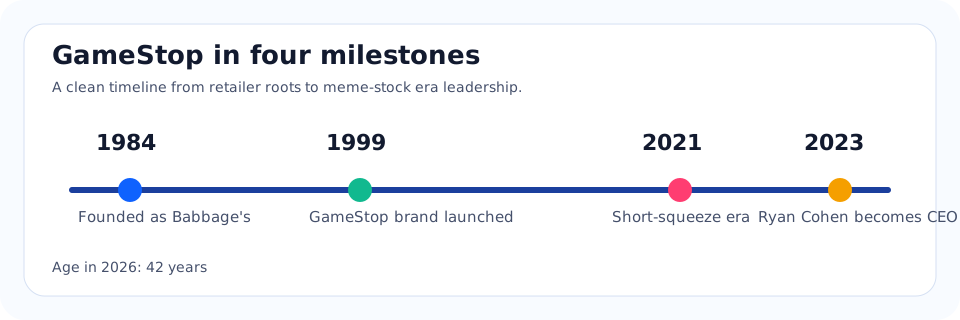
Source note: timeline drawn from company history references, SEC filings, and major public events listed below.
Why the CEO matters
Ryan Cohen became CEO in 2023 after already serving as chairman. For investors, that matters because it concentrates more strategic responsibility in one person. Supporters read that as alignment and speed. Critics read it as execution risk if the turnaround remains unclear.
What to watch going forward
- Store-footprint changes and operating discipline
- Revenue mix between legacy physical sales and newer categories
- Cash allocation decisions and balance-sheet strategy
- Whether management can turn attention into durable operating performance