Quick facts
| Item | Detail |
|---|---|
| Company | AMC Entertainment Holdings, Inc. |
| Consumer brand | AMC Theatres |
| Founded | 1920 |
| Company age | 106 years old in 2026 |
| Headquarters | Leawood, Kansas |
| Current CEO | Adam Aron |
| CEO since | January 2016 |
| Main business | Movie exhibition, concessions, premium formats, and related entertainment distribution |
What AMC does
AMC runs movie theaters and makes money mainly from ticket sales, food and beverage sales, premium screens, and loyalty programs. It also uses its scale to negotiate with studios, run special theatrical events, and expand premium viewing formats such as IMAX, Dolby Cinema, and branded large-screen concepts.
For meme-stock readers, the core point is simple: AMC is still a real operating company with a large physical footprint, but its stock can trade on a very different rhythm than the theater business itself.
History in plain English
AMC began in 1920 in Kansas City and became one of the companies that helped popularize the multiplex theater model in the United States. That matters because AMC was not built as a short-term market story; it was built as a scale entertainment operator.
Its modern history has a few major turning points:
- It expanded aggressively through acquisitions and became the largest movie exhibitor in the world.
- The pandemic put heavy pressure on revenue, liquidity, and debt.
- The 2021 meme-stock surge changed AMC’s shareholder base and raised its public profile dramatically.
- Since then, investors have watched the company through two lenses at once: theater fundamentals and capital-markets behavior.
Simple chart
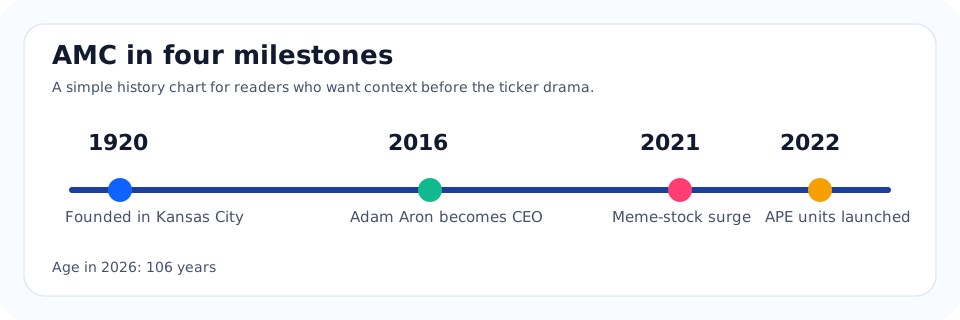
Source note: timeline drawn from company history references, SEC filings, and major public events listed below.
Why the CEO matters
Adam Aron became CEO in early 2016. That means he has led AMC through a pre-pandemic expansion period, the COVID-era survival phase, the 2021 meme-stock run, and the APE-era capital structure debate. If you are studying AMC, his tenure is part of the story, not a side note.
What to watch going forward
- Box-office recovery versus debt and financing needs
- Attendance trends versus concession spending
- Share-count and capital-structure decisions
- Whether operating improvements are strong enough to matter more than market narrative